- Entry type: Person
- Entry ID: AWE26022433
Tyndale-Biscoe, Marina
- Dr
- Birth name Szokoloczi, Marina
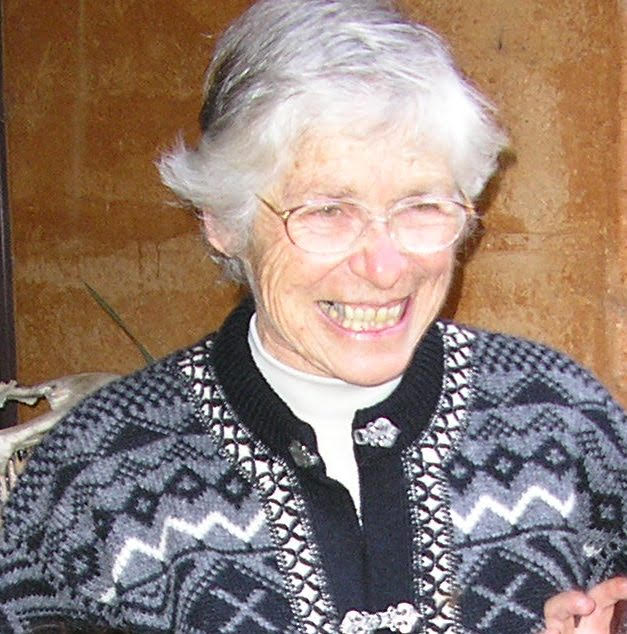
Dr Marina Tyndale-Biscoe
Used with permission of Hugh Tyndale-Biscoe
- Born 27 January 1936, Budapest, , Hungary
- Died 12 July 2025, Canberra, Australian Capital Territory, Australia
- Occupation Conservationist, Entomologist, Scientist
Summary
Born in Hungary, Marina Tyndale-Biscoe migrated with her family to Australia in 1949 and grew up in Tasmania. She moved to Canberra in 1962, joining the Commonwealth Scientific and Industrial Research Organisation (CSIRO) as an entomologist, studying bushflies which breed in fresh cow dung and were a serious health hazard in summer. She went on to play a major role in a team assessing the suitability of foreign dung beetles for controlling the breeding cycle of bushflies. As a result, summers in south eastern Australia and Tasmania are no longer bedevilled by flies, which has had a major beneficial impact on the outdoor lifestyles of Australians.
Details
Marina Szokoloczi was born in Budapest shortly before World War 2, and grew up on the family estate in Slovakia. After the war, her family was forced off the estate by the communist government and migrated to rural Tasmania in 1949. Marina fell in love with the Australian landscape; her love of nature led her to complete a zoology honours degree at the University of Tasmania.
She met and married zoologist Hugh Tyndale-Biscoe in 1960 and they moved to Perth where she joined the Western Australia Museum, working on the taxonomy of pebble crabs. In 1962 the family moved to Canberra where Hugh took up a position at the Australian National University and Marina became a full-time mother with three young children. In mid-1965 she shocked many of her contemporaries by returning to research full-time at the Commonwealth Scientific and Industrial Research Organisation (CSIRO) Division of Entomology, entrusting the children to the care of a family friend. She spent the next five years studying bushflies.
At that time, bushflies were a serious health pest for humans in the summer months in south eastern Australia. In Canberra, for example, it was illegal for restaurants to serve food outside and any outdoor venture was accompanied by ‘the great Australian salute’. Marina’s research investigated the physiological age of adult female bushflies; from this it became possible to determine where they went in winter. In spring, colonists are blown south from breeding areas in Queensland to re-establish the population. Their success depends on the quantity and quality of fresh cow dung, so the key to their control was to find ways to disperse the dung. Native dung beetles cannot break down large cow pats. In 1972 Marina joined another CSIRO program assessing the suitability of many species of foreign dung beetles for breaking down the cow dung and burying it (which also benefited the soil). As a result of that very successful program, south eastern Australia and Tasmania are now relatively free of bushflies in summer and outdoor lifestyles have become the norm.
Tyndale-Biscoe published her research in a series of papers from the late 1960s. It also formed a major part of her PhD thesis completed at James Cook University in 1985. In the 1990s CSIRO Publishing published two books by Tyndale-Biscoe on dung beetles which were widely used by farmers to help them choose the most effective dung beetle types for their area.
In 1980 the Tyndale-Biscoes bought a property by the Mongarlowe River, near Braidwood NSW, and revegetated the degraded native forest. With the poet and environmentalist Judith Wright, she was a founding member of the Friends of the Mongarlowe Forest. This group sought to protect the forest, the river and its headwaters from logging and mining.
Tyndale-Biscoe deposited her archives with the National Library of Australia in 2024. They included not only her records of her scientific research and conservation activities, but also family records made and kept by her mother during the dangerous and challenging times of the German and Soviet occupation of Slovakia. She had published these in 2014 as Horka – a Home that Was: Surviving in Czechoslovakia 1938 to 1949. Tyndale-Biscoe died in Canberra on 12 July 2025.
Archival resources
Published resources
- Book
- Memoir
-
Journal article
- Tribute to Dr Marina Tyndale-Biscoe (nee Szokoloczi): Entomologist and conservationist, Saunders, D. A., 2025, https://doi.org/10.1071/PC25058
- Obituary