- Entry type: Cultural Artefact
- Entry ID: AWE0017
Australian Women’s Charter
(1943 – )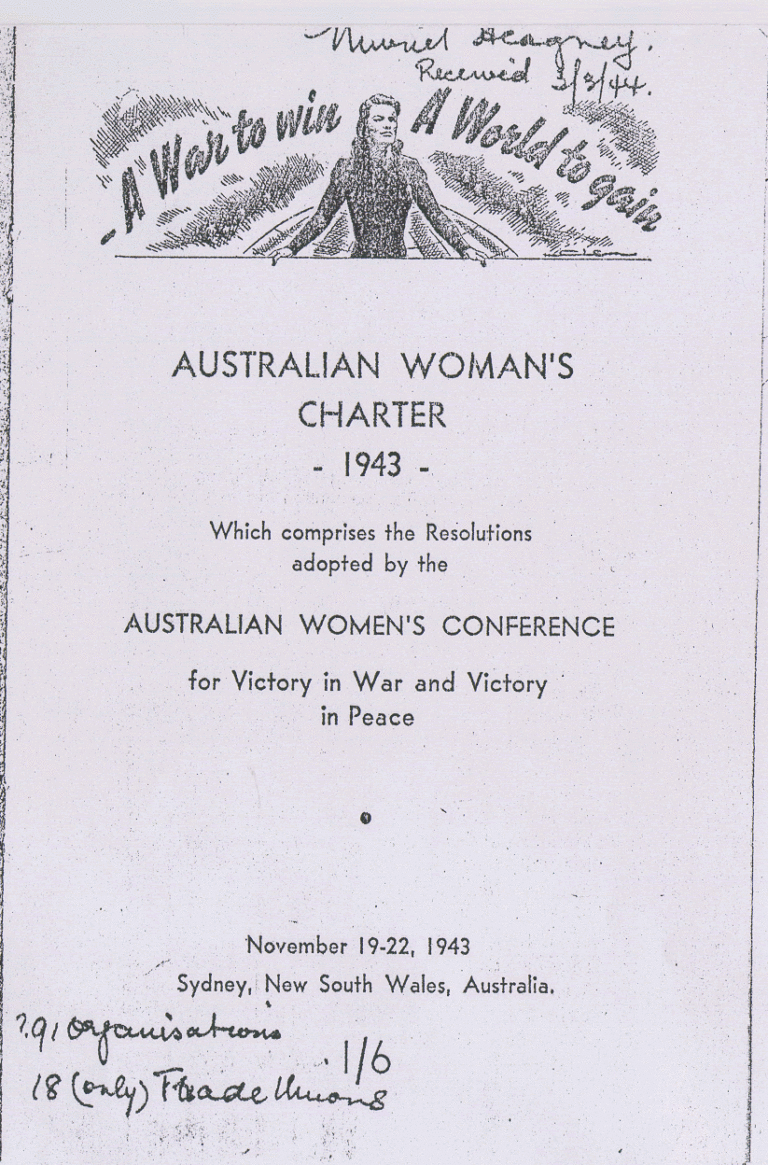
- Occupation Feminist Manifesto
Summary
The Australian Women’s Charter was a program of reforms put forward by women for incorporation into government planning of postwar reconstruction. Described as ‘the feminist agenda for postwar reconstruction’ and ‘a landmark feminist manifesto’, the charter documented a wide range of issues and objectives that were discussed at the Australian Women’s Conference For Victory in War and Victory in Peace, held in Sydney in November 1943. It ranged over a series of issues – women’s right to paid work, the necessity for adequate child care, the particular needs of rural and Aboriginal women amongst them – and reflected the conference participants’ agenda for women in the post war world, an agenda that was influenced heavily by women’s wartime experiences. A series of publications, programs and follow-up Charter conferences were organized to plan and campaign for the implementation of its aims.
Archival resources
- Mitchell and Dixson Libraries Manuscripts Collection
- National Library of Australia, Manuscript Collection
- Royal Historical Society of Victoria Inc
- Noel Butlin Archives Centre, Australian National University
- State Library of Western Australia
- The University of Melbourne Archives
- Fryer Library and Department of Special Collections
Digital resources
- Title: Australian Woman's Charter 1943
- Type: Image
- Description: Copy of pamplet, held La Trobe Library, State Library of Victoria, LTP 301.412 AU7A
- Date: 3 May, 2023
Published resources
- Book
- Edited Book
- Book Section
Related entries
-
Related Women
-
Related Events
-
Related Organisations
-
Honorary Secretary
-
Membership
-
Committee Member